
Carriage Screws Manufacturer
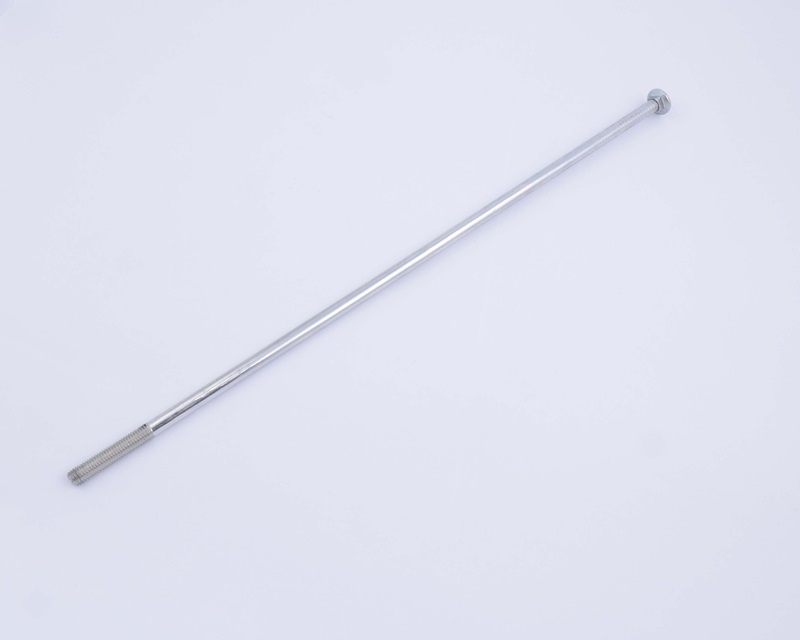 Long carriage bolts with rounded heads and square necks arranged side by side
Long carriage bolts featuring rounded heads and square necks. Contact Pi Chan Metal in Taiwan with your drawing to discuss dimensions, thread requirements, materials, and finishes.
Carriage Screws Manufacturer in Taiwan for Your Assembly Requirements
Selecting a carriage screws manufacturer requires a clear understanding of the fastener and the connection it will secure. Thread dimensions, head geometry, square neck fit, material properties, and surface finish all affect whether the product suits the assembly.
Carriage screws are commonly called carriage bolts or round head square neck bolts. The conventional design combines a smooth, rounded head with a square section immediately beneath it. When properly engaged with the receiving component, the square neck helps resist rotation while the nut is tightened.
Pi Chan Metal Co., Ltd., based in Changhua, Taiwan, welcomes inquiries for carriage screws. Submit your drawing, application details, and order quantity to discuss the requested specification and manufacturing feasibility.
Visit Pi Chan Metal Co., Ltd. to learn more about the company and its screw product categories.
What Are Carriage Screws and Carriage Bolts?
In this product category, “carriage screw” generally refers to the fastener more commonly described as a carriage bolt. Unlike a wood screw, a conventional carriage bolt uses a machine thread and is typically secured with a compatible nut.
The rounded head normally has no screwdriver slot or internal drive. Instead, the square neck provides resistance to rotation when it engages a suitable hole or receiving material.
| Product Feature | Function | Specification to Confirm |
|---|---|---|
| Rounded head | Provides a smooth exposed profile | Head diameter, height, and shape |
| Square neck | Helps resist rotation during tightening | Width, height, and fit |
| Shank | Passes through the assembled components | Diameter and unthreaded length |
| Machine thread | Engages a compatible nut | Diameter, pitch, and tolerance |
| Thread coverage | Defines where engagement is available | Required threaded length |
| Nut and washer arrangement | Completes the fastening assembly | Compatibility and inclusion in the order |
A product name alone does not establish the exact dimensions or performance requirements. Use a drawing or identified standard as the purchasing reference.
Why Square Neck Fit Matters
The square neck is a defining feature of a conventional carriage bolt. Its fit with the receiving component should be considered early in the design.
For a metal component, a compatible square hole can restrain the neck. In wood assemblies, the neck may engage the material beneath the head, provided the wood and connection geometry are suitable.
An oversized hole can allow rotation, while an unsuitable fit can prevent seating or damage the component. The rounded head should seat as intended without relying on excessive tightening force to correct a mismatch.
| Assembly Detail | What to Review | Why It Matters |
|---|---|---|
| Square neck width | Relationship to the receiving hole | Controls fit and rotation resistance |
| Neck height | Relationship to component thickness | Helps prevent interference beneath the joint |
| Hole geometry | Shape, dimensions, and tolerances | Supports correct seating |
| Receiving material | Grade, thickness, or wood characteristics | Affects resistance to deformation |
| Head seating | Contact beneath the rounded head | Supports proper clamping |
| Nut-side access | Space for the installation tool | Allows tightening and servicing |
Do not assume that the square neck will prevent rotation in every material or hole configuration. Evaluate the complete assembly.
Carriage Screw Specifications to Include in Your Drawing
A complete specification helps the manufacturer assess the request and quote against a consistent reference.
Where a product standard is required, identify the standard and edition. DIN 603 is a commonly referenced dimensional standard for metric round head square neck bolts. State any drawing-specific deviations separately.
| Specification | Information to Provide |
|---|---|
| Product reference | Required standard or controlled drawing |
| Thread designation | Diameter, pitch, and thread tolerance |
| Length | Required length and measurement reference |
| Head dimensions | Diameter, height, and profile |
| Square neck | Width, height, and tolerances |
| Shank | Diameter and unthreaded section requirements |
| Threaded length | Minimum, maximum, or specified coverage |
| Material | Required grade or material specification |
| Mechanical properties | Required property class or strength specification |
| Finish | Surface treatment and acceptance criteria |
This table is an inquiry checklist rather than a list of confirmed stock options. Available configurations must be reviewed for the requested product.
For nonstandard dimensions or special features, see special screw manufacturing and submit the relevant drawing.
Select Length and Thread Coverage for the Complete Joint
Length selection should account for the parts being clamped, washers, nut thickness, and permitted thread projection.
For a conventional rounded-head carriage bolt, length is generally specified from beneath the head to the tip. Confirm the measurement reference on the drawing.
Thread coverage also matters. An unthreaded section that extends too far toward the nut can prevent the joint from clamping correctly. Conversely, the position of the threaded section may be important to the original connection design.
| Component or Dimension | What to Include in the Review |
|---|---|
| Clamped parts | Total assembled thickness |
| Square neck | Position and engagement within the receiving component |
| Washers | Quantity, thickness, and location |
| Nut | Required dimensions and compatible thread |
| Thread projection | Permitted extension beyond the nut |
| Surrounding parts | Clearance beyond the bolt tip |
| Thread transition | Position relative to the nut and components |
For extended-reach projects, review extra long screws and confirm whether the proposed carriage-head configuration is feasible. A general length range does not confirm every head, diameter, and material combination.
Match the Fastener to the Application
Carriage bolts may be considered for wood-and-metal assemblies, brackets, frames, and other connections where a rounded exposed head is desired.
However, a similar appearance does not make every carriage bolt interchangeable. Material strength, neck geometry, component thickness, and installation access remain important.
| Application Type | Details to Provide | Main Review Point |
|---|---|---|
| Wood-to-metal assembly | Wood description and bracket drawing | Neck engagement and bearing conditions |
| Metal bracket connection | Material thickness and square-hole dimensions | Neck fit and head seating |
| Furniture hardware | Visible surfaces and access restrictions | Appearance and assembly clearance |
| Frame or support assembly | Connection geometry and loading requirements | Fastener and joint suitability |
| Outdoor equipment | Exposure and mating materials | Material and finish compatibility |
These examples describe potential selection contexts, not certified applications or guaranteed product suitability.
If the connection requires a screw driven directly into wood, visit the wood screw manufacturer page to review the related product category.
Material, Strength, and Finish Requirements
Specify material and mechanical properties separately from dimensions. A carriage bolt’s head shape does not establish its strength.
Likewise, terms such as “stainless,” “galvanized,” or “rustproof” do not fully define a purchasing requirement. Identify the material grade, surface treatment, and relevant acceptance criteria.
| Requirement | Details to Specify |
|---|---|
| Material grade | Required material designation |
| Mechanical properties | Applicable strength specification or property class |
| Surface treatment | Coating type and relevant requirements |
| Service environment | Indoor, outdoor, humid, or chemically exposed |
| Mating components | Nut, washer, and connected material specifications |
| Appearance | Color and acceptable surface variation |
| Verification | Required inspection or material documentation |
Confirm that the nut and bolt remain compatible after the specified surface treatment. Material and finish availability must be checked for the complete configuration.
Quality Checks to Agree with Your Carriage Screws Manufacturer
Useful quality requirements are specific and measurable. Identify the dimensions and characteristics that directly affect assembly, then agree on inspection and documentation before ordering.
| Inspection Item | Acceptance Requirement to Agree |
|---|---|
| Head | Diameter, height, profile, and surface condition |
| Square neck | Width, height, and relevant tolerances |
| Length | Measurement reference and permitted variation |
| Thread | Size, pitch, tolerance, and inspection method |
| Mechanical properties | Required evidence or testing |
| Finish | Agreed coating and surface criteria |
| Assembly fit | Seating and rotation resistance in representative parts |
| Identification | Part number, revision, and required batch information |
These are topics to discuss with the supplier; they do not imply that every test or document is included with every order.
If samples are supplied, evaluate them with the intended components and installation method. Record the approved drawing revision and acceptance results before authorizing repeat production.
Request a Carriage Screw Quotation from Pi Chan Metal
Send a dimensioned drawing with the required material, finish, quantity, and delivery information. Include the mating-hole geometry when square neck fit is critical.
| Inquiry Item | Information to Include |
|---|---|
| Drawing | Part number, revision, dimensions, and units |
| Product specification | Standard and any drawing-specific requirements |
| Mating components | Hole dimensions and material thickness |
| Material and finish | Required grade, properties, and treatment |
| Quantity | Initial order and expected repeat demand |
| Accessories | Whether nuts or washers are required |
| Approval | Sample and inspection requirements |
| Packaging | Quantity per pack, labeling, and protection |
| Delivery | Destination and requested date |
Contact Pi Chan Metal to discuss manufacturing feasibility, pricing, minimum order quantity, and delivery arrangements.
Carriage Screws Manufacturer FAQ
Are Carriage Screws the Same as Carriage Bolts?
In this product category, the names generally describe the same type of rounded-head fastener with a square neck. “Carriage bolt” is the more common purchasing term. Confirm the product with a drawing or standard because naming practices can vary.
What Does the Square Neck Do?
The square neck helps resist rotation when it engages a suitable receiving hole or material. This allows the nut to be tightened without gripping the rounded head. Its effectiveness depends on the neck dimensions, receiving component, and fit.
Do Carriage Bolts Require a Nut?
A conventional carriage bolt is typically secured with a compatible nut. Confirm whether the quotation includes the bolt only or a complete set with nuts and washers. Do not assume accessories are included.
Can Carriage Bolts Be Used in Metal Components?
Yes, when the connection is designed for them. A compatible square hole can engage the neck and resist rotation. Review hole dimensions, component thickness, seating, and the required joint performance.
Can a Carriage Bolt Replace a Wood Screw?
Not automatically. A conventional carriage bolt uses a machine thread and typically requires access to a nut on the opposite side. A wood screw is intended to engage the receiving wood directly. The installation method and connection design differ.
How Is Carriage Bolt Length Measured?
For the conventional rounded-head design, length is generally measured from beneath the head to the tip. State the reference on the drawing and identify the square neck and threaded length separately when they affect fit.
Are All Carriage Bolts Fully Threaded?
No. Thread coverage varies with the product specification and size. If coverage matters, show the required threaded length and unthreaded section explicitly. Do not rely on a photograph to establish the configuration.
Does the Rounded Head Make a Carriage Bolt Tamper-proof?
No. A smooth head limits direct tool engagement from that side, but it does not make the complete assembly tamper-proof. Security depends on access to the nut and the overall connection design.
Is DIN 603 a Strength Grade?
No. It is a commonly referenced dimensional standard for this product type. Material and mechanical property requirements must also be specified. A dimensional standard alone does not establish suitability for a particular load.
Which Material Is Best for Outdoor Use?
The appropriate material and finish depend on exposure, connected materials, and required mechanical properties. Specify the actual service environment. A general description such as “stainless” or “galvanized” is not enough to confirm suitability.
Can Pi Chan Review Custom Carriage Screw Requirements?
Submit a drawing showing the head, square neck, thread, length, material, finish, and quantity. Include mating-part details where fit is critical. Manufacturing feasibility and commercial terms require confirmation for the proposed specification.
What Are the Minimum Order Quantity and Lead Time?
They depend on dimensions, tooling, material, finish, quantity, and the production schedule. Request confirmation during quotation and provide the required delivery date and destination.